
Federal Hemp Delay Leaves Texas THC Ban Unchanged
09/11/2026
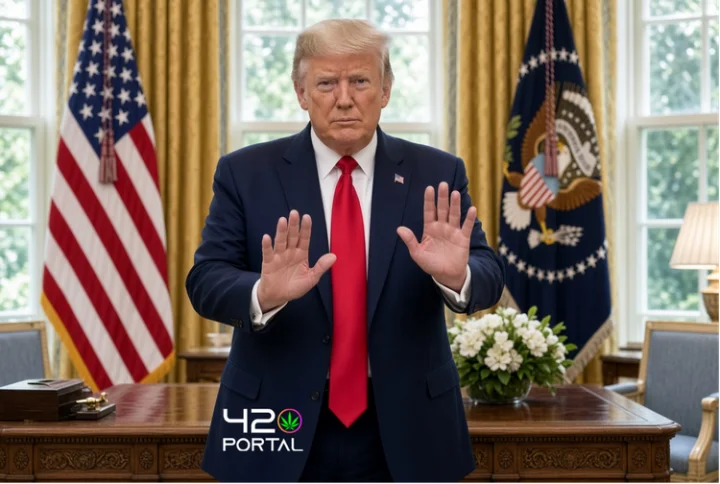
President Donald Trump signed a government funding bill that pushes new federal limits on hemp-derived THC products from November 12 to December 11. The extra month is meant to give Congress time to write rules instead of a hard cutoff. For people in Texas, the delay changes almost nothing.
Texas already treats most hemp-derived THC products as Schedule I controlled substances. Those rules took effect July 31 after the Texas Supreme Court allowed the Texas Department of State Health Services to restore 2021 definitions. Delta-8, delta-10, THCP, THCA flower, and other synthetic or concentrated hemp THC variants are banned. Possession can be charged as a state jail felony, carrying 180 days to two years in jail and fines up to $10,000. Retailers risk losing hemp licenses and facing criminal charges.
U.S. District Judge Jeffrey Brown in Galveston declined a September 6 emergency request from two hemp retailers and a distributor to freeze the state ban. The businesses said the rules clash with the 2018 Farm Bill’s hemp protections and burden interstate commerce. Brown found they had not shown enough irreparable harm. A request for a fuller preliminary injunction is still pending.
What remains legal in Texas is narrow. Products that stay under 0.3% delta-9 THC by dry weight, the federal hemp standard from the 2018 Farm Bill, can still be sold. That covers some delta-9 gummies, beverages, and tinctures. A separate fight over smokable hemp flower is still in court, so qualifying delta-9 hemp flower has stayed on shelves for now.
Texas also runs a limited medical program. Qualified doctors can prescribe low-THC cannabis through the Compassionate Use Program. Those products cannot exceed 0.5 percent THC by weight and cannot be smoked. Patients receive oils, tinctures, or capsules entered into a state registry.
The federal delay keeps the national fight over intoxicating hemp alive a little longer. In Texas, the marijuana-adjacent market has already been narrowed to a thin slice of low-dose delta-9 products while the rest of the hemp THC aisle is treated as illegal marijuana.
Reference
Texas already treats most hemp-derived THC products as Schedule I controlled substances. Those rules took effect July 31 after the Texas Supreme Court allowed the Texas Department of State Health Services to restore 2021 definitions. Delta-8, delta-10, THCP, THCA flower, and other synthetic or concentrated hemp THC variants are banned. Possession can be charged as a state jail felony, carrying 180 days to two years in jail and fines up to $10,000. Retailers risk losing hemp licenses and facing criminal charges.
U.S. District Judge Jeffrey Brown in Galveston declined a September 6 emergency request from two hemp retailers and a distributor to freeze the state ban. The businesses said the rules clash with the 2018 Farm Bill’s hemp protections and burden interstate commerce. Brown found they had not shown enough irreparable harm. A request for a fuller preliminary injunction is still pending.
What remains legal in Texas is narrow. Products that stay under 0.3% delta-9 THC by dry weight, the federal hemp standard from the 2018 Farm Bill, can still be sold. That covers some delta-9 gummies, beverages, and tinctures. A separate fight over smokable hemp flower is still in court, so qualifying delta-9 hemp flower has stayed on shelves for now.
Texas also runs a limited medical program. Qualified doctors can prescribe low-THC cannabis through the Compassionate Use Program. Those products cannot exceed 0.5 percent THC by weight and cannot be smoked. Patients receive oils, tinctures, or capsules entered into a state registry.
The federal delay keeps the national fight over intoxicating hemp alive a little longer. In Texas, the marijuana-adjacent market has already been narrowed to a thin slice of low-dose delta-9 products while the rest of the hemp THC aisle is treated as illegal marijuana.
Reference
