
Minnesota Marijuana Market Crosses $250 Million in First Year of Recreational Sales
09/18/2026
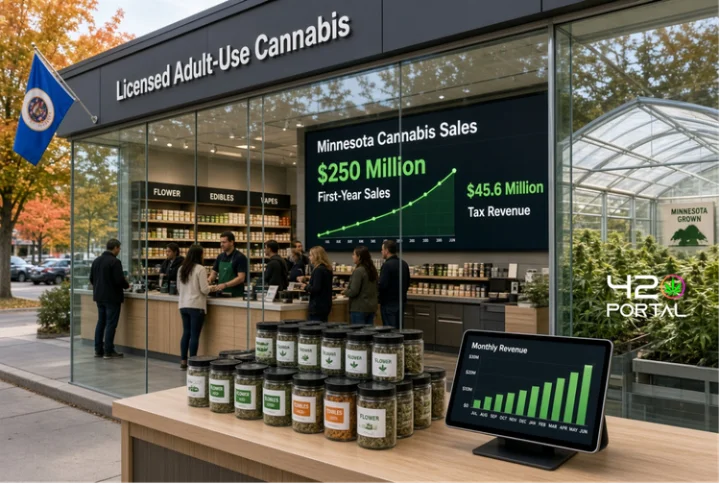
Minnesota’s licensed marijuana businesses have now completed a full year of recreational sales, and the numbers show a market that is growing even as it still trails some neighboring states. State-licensed shops began selling adult-use marijuana on Sept. 16, 2025, after tribal retailers had already been operating for about two years and the medical program had been in place for a decade. In that first year, customers spent roughly $150 million on recreational products and another $100 million on medical marijuana, for a combined total above $250 million.
Those sales, together with lower-potency hemp edibles and drinks, produced $45.6 million in tax revenue over the first 10 months, according to figures from the Office of Cannabis Management and the Department of Revenue. Office of Cannabis Management executive director Eric Taubel has pointed to the expansion of licensed growers and retailers as evidence the state is building a more sustainable supply chain rather than racing for the largest possible first-year haul.
The production side has changed quickly. A year ago the state had 11 licensed cultivators holding about 72,000 plants. That has grown to 102 license holders and nearly 490,000 plants. Almost 370 new marijuana businesses opened in the same period, and more than 40 percent of the new licensees applied as social equity applicants, including veterans and people from communities hardest hit by earlier prohibition.
The medical program has also expanded. Registered patients now number more than 90,000 after the state dropped patient fees and added qualifying conditions in 2023. Patients use marijuana for chronic pain, PTSD, cancer, epilepsy, and other conditions.
The recreational totals still sit well below Ohio’s first-year adult-use figure of more than $700 million. Early bottlenecks, including limited testing capacity and uneven product supply for smaller shops, slowed the Minnesota rollout. Officials expect more flower and other products to reach shelves this fall as the extra cultivation capacity comes online. Starting in January, rules that required medical and recreational products to stay separate through the entire supply chain will be eased, a change meant to let the market operate more efficiently.
Federal changes to the definition of hemp have also created uncertainty for the low-dose THC drinks and edibles that sit alongside licensed marijuana in many stores. Lawmakers have delayed the tightest restrictions, giving the industry more time to adjust while the core licensed marijuana market continues to scale.
Reference
